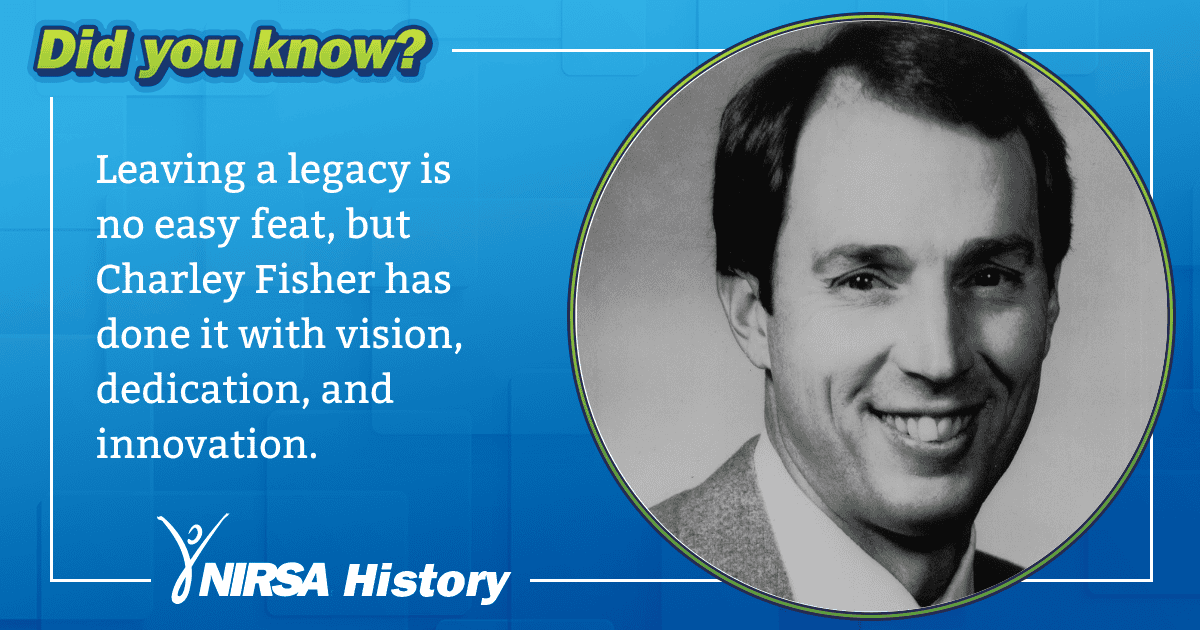
Leaving a legacy is something we all aspire to achieve. Our actions—past, present, and future—shape the legacies we leave behind. Some may be small and meaningful to a select few, while others leave a lasting impact on entire communities or cultures. Regardless of their scope, all legacies deserve recognition. Join us as we explore the remarkable legacy of Past President of NIRSA Charley Fisher, retired Director of Intramurals at Oregon State University.
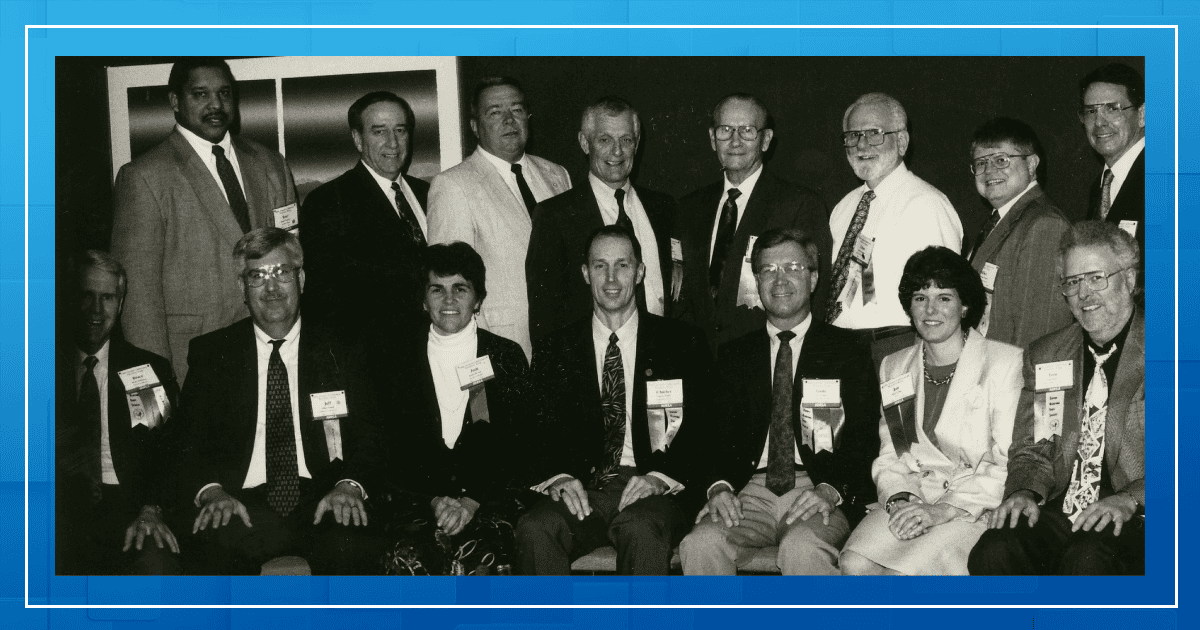
Charley’s contributions to NIRSA, campus recreation, and recreational sports have been nothing short of transformative over his illustrious career. From serving as NIRSA President to authoring influential research papers, Charley is recognized as a pillar of the industry for over three decades. To truly appreciate his impact, we must travel back more than 30 years, to 1985, the year he was appointed NIRSA President.
A pivotal presidency
The 1985–1986 academic year marked a pivotal time for NIRSA. As the organization expanded, it became clear that it needed additional resources and leadership to continue its growth. During this time, Fisher, as NIRSA President, received significant communication from then-part-time Executive Director Will Holsberry, who expressed that the organization’s needs had outgrown what he could provide.
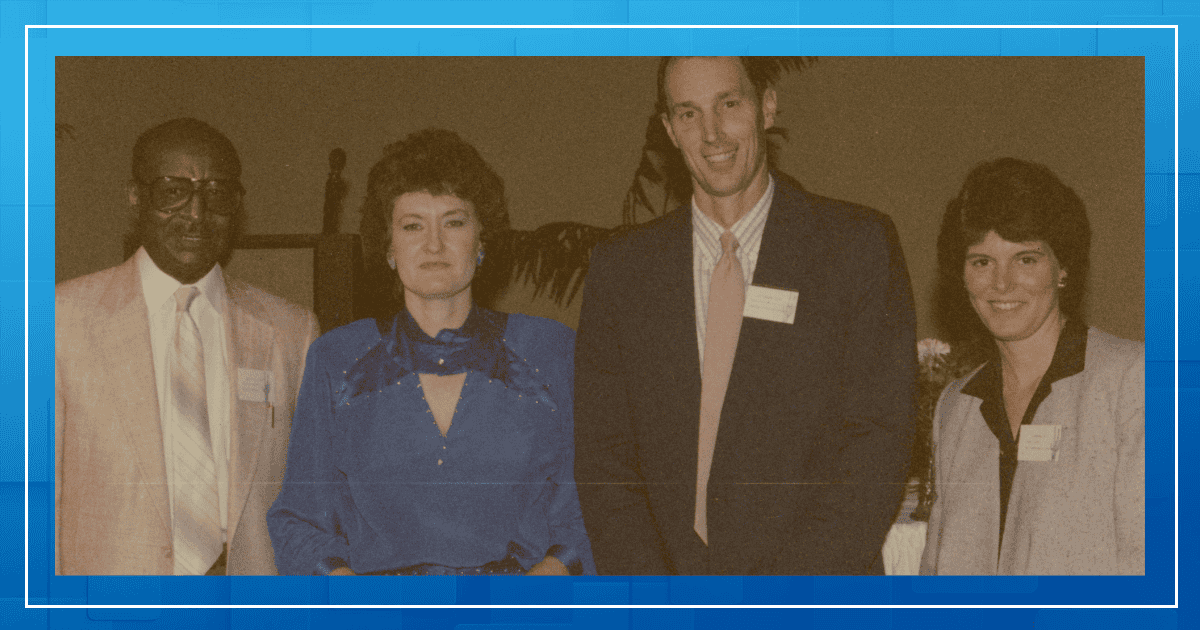
Will Holsberry’s departure initiated a thorough review of the Executive Director role and sparked conversations about expanding the role to a full-time position. By the summer of 1986, Will accepted an offer to pioneer the job and began serving as NIRSA’s first full-time Executive Director, ushering in a new era for the organization and providing members with the dedicated leadership they deserved.
An instant impact
Beyond his presidency, Charley has made numerous contributions to the field. When asked about his most significant achievements, he highlighted an idea that emerged during an Annual Conference and ultimately revolutionized intramural sports: the introduction of “instant scheduling.” Fisher recalls how this concept arose from a shared challenge faced by intramural sports directors at the time—creating a scheduling system that was fairer than the then-standard “first come, first served” model.
After extensive discussion, Charley and his peers developed the Instant Scheduling model, which quickly gained traction and became an industry standard. Charley reflects, “Although this was a simple solution, it had a significant impact on intramural programs.” This story exemplifies how meaningful conversations can evolve into groundbreaking innovations—a hallmark of the NIRSA community.
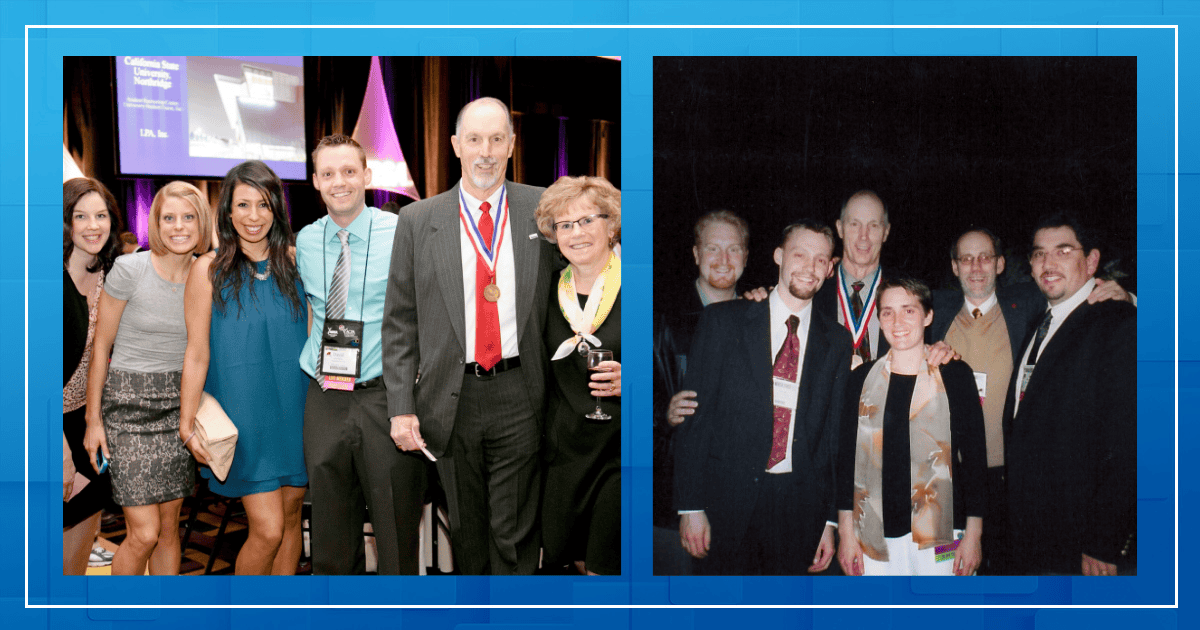
Charley Fisher is a pillar in NIRSA’s pantheon of leaders
Over his 30+ years as an industry professional, Charley has witnessed and contributed to many changes—some for the better, others presenting new challenges. After attending his first NIRSA Conference at the Air Force Academy in 1970, Fisher noted the glaring inequality of women being excluded from the organization, despite serving co-ed student populations. He was a NIRSA member when the ban on women’s membership was lifted in 1971, after a 12-year exclusion. Fisher acknowledged the debates surrounding the decision but recognized it as a crucial step in fostering meaningful participation for all. Inspired by these transformative moments and guided by NIRSA icons like Paul Gunsten of Virginia Tech and Pat Mueller of the University of Minnesota, Charley’s desire to contribute to the organization only grew.

Charley’s dedication extends to academic contributions, including co-authoring influential publications. One standout piece appeared in the 1997 Winter Edition of the NIRSA Journal (predecessor to the Recreational Sports Journal) “Turning Your Female Potential Participants into Participants in Your Intramural Sports Program.” This research addressed barriers to female participation in intramural sports—an area that remains male-dominated.
The 1997 article identified two critical insights: first, the importance of social aspects in creating enjoyable experiences for female participants, and second, the need to address perceived barriers to participation. These findings played a vital role in fostering inclusion within collegiate recreational sports and continue to influence the field today.
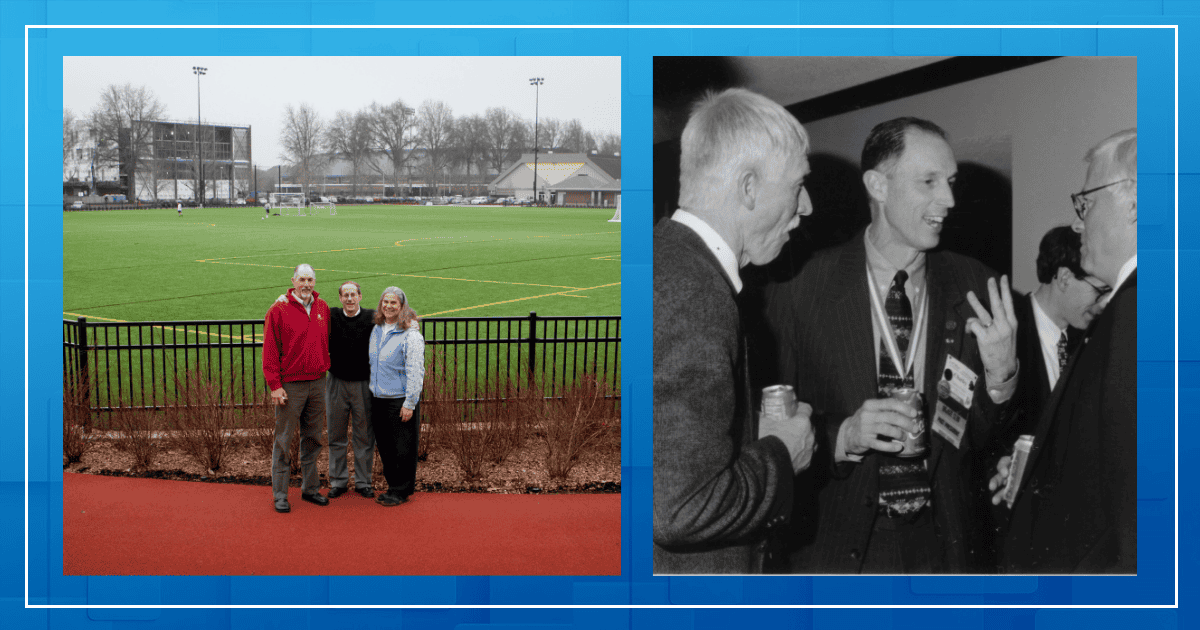
A recipient of the NIRSA Honor Award, NIRSA’s highest distinction, Charley Fisher’s contributions to NIRSA are too numerous to recount in full, but these highlights illustrate the profound impact he has made on the organization and on campus recreation as a whole. Leaving a legacy is no small feat, and Charley has done so with grace, vision, and an unwavering commitment to the industry. We thank him for laying the foundation for future generations. It is through the work of legacy builders like Charley that our NIRSA and our profession continues to grow and thrive.
Who are the Top 10 humans of your NIRSA history?
The History and Legacy Committee is hoping to amplify diverse perspectives as they work to honor the individuals and milestones that have made a positive impact on your NIRSA experiences.
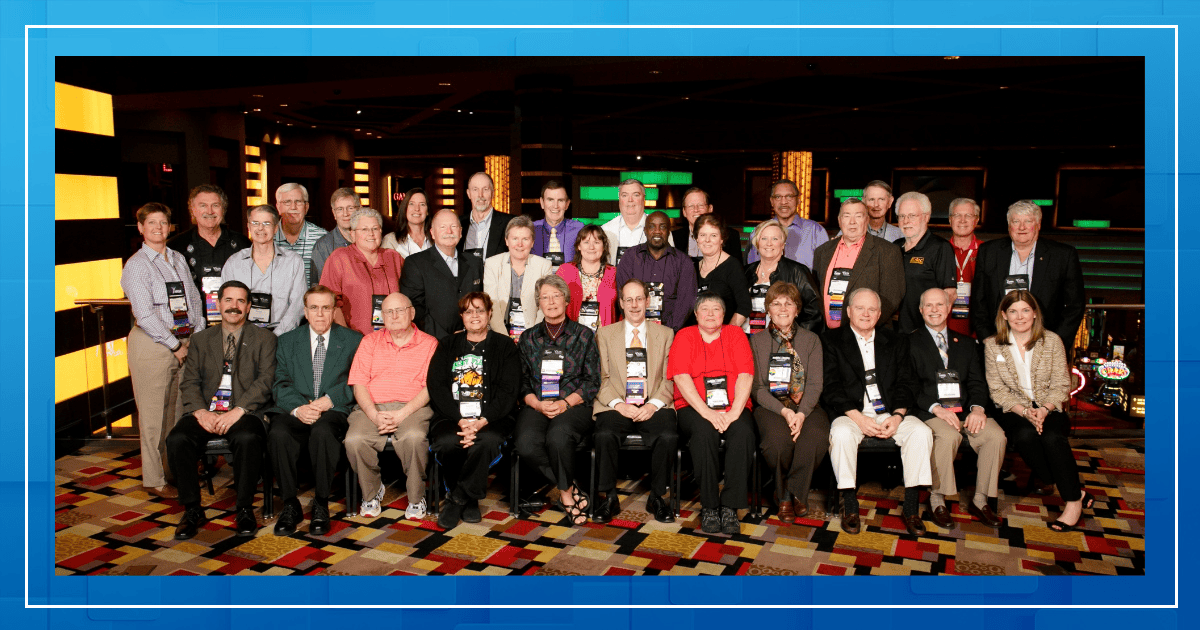
Take a few minutes this week to list up to 10 individuals, from your perspective, who have had the most significant impact on NIRSA, on the profession of campus recreation, and on your NIRSA experience. Don’t worry about listing them in any particular order.
- If you are interested in highlighting your campus or the achievements of a NIRSA member from your campus, pitch us your ideas.