The move to a new model
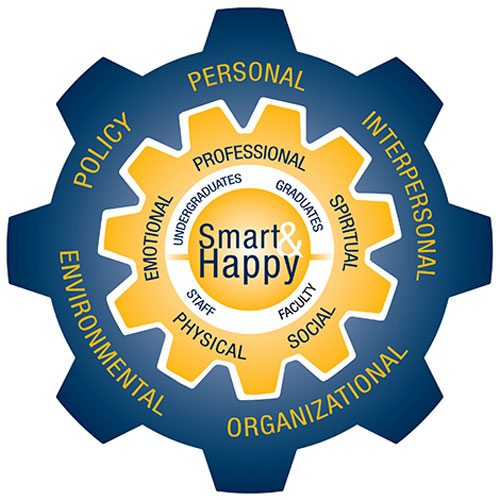
The move to a more-integrated health and wellbeing approach did not happen overnight; it was instead a lengthy and thoughtful process involving cooperation and innovation from many different aspects of the Georgia Tech community as well as leadership from the Campus Recreation Complex. Historically, the CRC reported to the Division of Student Affairs, which is now called Student Life. While the CRC collaborated on many programs and events across campus, its main focus was geared towards students and the student learning outcomes of those who walked through its main doors every day. A shift in this mindset began in 2008 when the CRC and Health Promotions formed a coalition aptly referred to as Go T.E.C.H. or Teams Encouraging Campus Health. Go T.E.C.H was charged with creating community-wide programs that encouraged health and physical activity and leveraged collaboration and innovation to promote their mission—even creating a team challenge between student groups and departments to encourage participation. A strategic plan focused on the overall health and wellbeing of the Georgia Tech community emerged from this challenge. After receiving top-down review from University President Dr. G.P. “Bud” Peterson, the strategic plan was presented to the Mental Health Task Force and the Sexual Violence Task Force. These task forces created a detailed analysis of existing university programs and services and formed recommendations for how these programs and services—or new and different programs and services—could serve the Georgia Tech community more comprehensively. In 2015, the Center for Community Health and Wellbeing was finally created after the approved realignment of the CRC, Health Promotions, and Stamps Health Services into one comprehensive model. Dr. Suzy Harrington, the Center’s first and current Executive Director, was hired in December 2015 and immediately began encouraging the type of collaborative work that had led to the initial creation of the Center, which has since been rebranded to be Georgia Tech Health & Well-Being. Dr. Harrington has evolved the Go T.E.C.H. coalition into a formal Well-Being Council and invited campus partners to a health and well-being retreat to discuss current initiatives and identify gaps, and to discover broader opportunities for collaboration. In addition, a five-dimensional model was created and Go T.E.C.H. was rebranded as Tech Empowers Community Health to better reflect the work of Health & Well-Being. Georgia Tech is well on its way to realizing the positive outcomes of this new model.Broadening the scope of wellness and community
This collaborative, integrated wellness approach creates an umbrella under which a larger community can be served and receive more programs and services centered on the whole picture of wellness. A key element of Georgia Tech’s health and wellbeing strategy is to focus more on the community as a whole. While the same programs and services will continue to be offered to students, the university has broadened its services to cater to faculty, staff, and alumni through a variety of specific initiatives. “A key element of Georgia Tech’s health and wellbeing strategy is to focus more on the community as a whole.”
Sharing a mission and vision for student success
The many actors contributing to the success of Georgia Tech Health & Well-Being are deeply committed to a shared mission and vision of student success. This has eased the move to Georgia Tech’s strategy model. Both top-down and bottom-up support have been crucial to their success. From its conception, Georgia Tech Health & Well-Being received top-down support; President Peterson envisioned an integration of health and wellbeing partners for the campus community. From below, Georgia Tech students, faculty, and staff—especially those involved in the Go T.E.C.H. coalition—were supportive of increased health and wellbeing programs and services as well as increased coordination amongst different program areas. Continuing the momentum of this community support model, new programs will include wellbeing advocates to better strengthen and infuse a bottom-up approach. “ We are taking a concerted approach to creating a safer and healthier campus, one focused on the overall health and wellbeing of our entire community.”
Overcoming obstacles to change
While collaboration is crucial to Georgia Tech Health & Well-Being’s success, its team also recognizes the need for incremental change and slowly nudging this health and wellbeing cultural shift together. “Most individuals think they know what health and well-being is—they often think of diet and exercise. Health and wellbeing is who we are—not what we do,” says Caroline Dotts. This misperception is being tackled by Georgia Tech Health & Well-Being‘s efforts to work to reframe the definition of health and wellbeing. “Most individuals think they know what health and wellbeing is—they often think of diet and exercise. Health and wellbeing is who we are—not what we do.”
Fostering new and innovative approaches to create a culture of health
“We are creating a culture of health and wellbeing on campus where students, faculty, staff, and alumni can flourish and be fulfilled; where they can be smart and happy; where they can be less stressed; where they can thrive,” says Dr. Harrington. In order to continually improve this culture of health and wellbeing, Georgia Tech Health & Well-Being constantly measures the success of its programs and monitors its health and wellness policy. It is always innovating and considering new ways to integrate health and wellbeing into living/learning communities. Georgia Tech Health & Well-Being is also diving into more research on how this integrated approach affects students’ GPAs, retention rates, and even creates more opportunity for students to succeed. Because it is always striving to improve, the CRC looks forward to implementing surveys on participation. These surveys will allow research into the correlations between program and service usage and indicators of success including GPA, retention, and resiliency. Georgia Tech Health & Well-Being’s collaborative efforts allow the team at the CRC to constantly reflect on the state of the community and focus on questions that matter, such as ‘Are we less stressed?’ ‘Are we flourishing and feeling fulfilled?’ ‘Are we thriving in one or all areas of our wellbeing dimensions?’” says Caroline.Georgia Tech has truly embraced integrated wellness
Georgia Tech Health & Well-Being has created a model that takes programs and services to a new level of integration. While this approach relies on the cooperation of each pillar, the cross-dimensional model also allows each pillar to thrive. As more and more campuses shift toward integrated models, campus recreation can and will play a larger role. Integrated wellbeing is all about creating ever more exciting opportunities for campus recreation professionals to engage with student and community learning outcomes. “Integrated wellbeing is all about creating ever more exciting opportunities for campus recreation professionals to engage with student and community learning outcomes.”
Learn more
This member spotlight is part of an extended series exploring the emerging trend of integrated wellness in campus recreation. NIRSA’s emerging trends in collegiate recreation project is supported by Precor. For more information about Health & Well-Being at Georgia Tech, please contact Suzy Harrington, Executive Director. If you have questions about NIRSA’s Emerging Trends in Campus Recreation project, please contact NIRSA Research Coordinator Ruben Guzman. The conversation about creating a culture of health and wellbeing will continue at the 2017 NIRSA Annual Conference. Registration will open in early November for the 2017 NIRSA Annual Conference & Campus Rec and Wellness Expo, February 21-24, in National Harbor, Maryland. Photos courtesy of the Georgia Institute of Technology- If you are interested in highlighting your campus or a NIRSA member’s achievements on your campus, pitch us your ideas.