
See related: “Oregon State celebrates a 100-year legacy of sport, leadership, and wellness” | “Ohio State hosts a centennial honoring collegiate rec” | “100 Years of Rec Sports at the University of Michigan”
A highlight of the celebration will be the unveiling of the Hall of Honor and the induction of 16 individuals and four groups that comprise the inaugural class. Among them are former RecSports Directors Berry M. Whitaker, Anna Hiss, Sonny Rooker, and Betty A. Thompson who were responsible for shaping the history of today’s Division of Recreational Sports for a total of 72 years before current Director—and 2007 recipient of the NIRSA Honor Award—Tom Dison assumed the role in 1988. The evolution of the Division of Recreational Sports appears on this historical timeline.
“RecSports continues to evolve with new programs, facilities, and funding sources to meet the needs of today’s students and the next generation of Longhorns.”
Founding the intramural programs
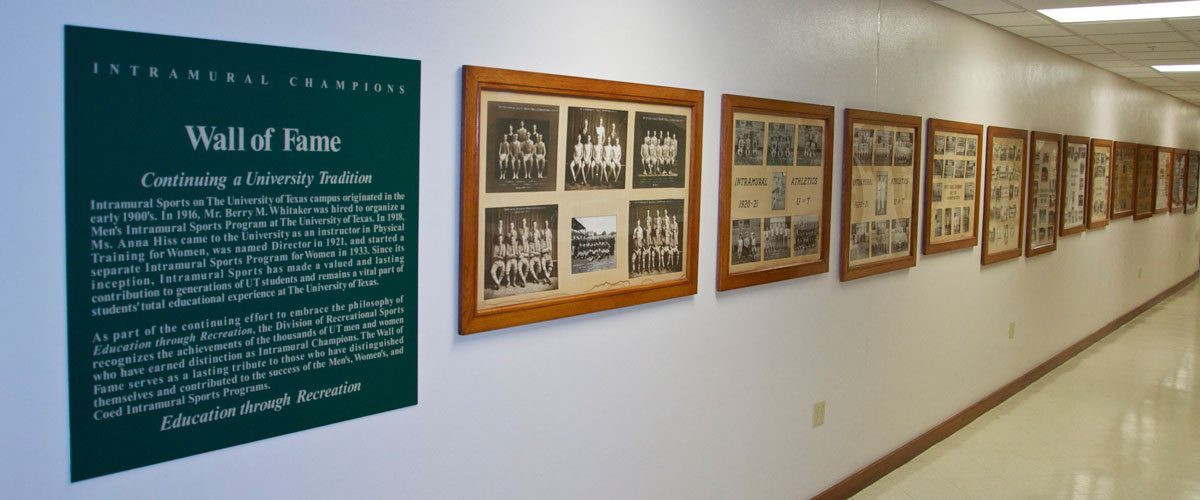
Two innovative individuals established the first men’s and women’s intramural/physical activity programs at The University of Texas at Austin. Berry M. Whitaker, an Indiana University graduate and football star, came to the Lone Star State when he was hired to start a physical education program for Austin’s public schools as well as to coach the Austin High School Maroons. Two straight state championships caught the eye of UT Athletic Director Theo Bellmont who hired Berry in 1916 to start a formal men’s intramural program. Berry’s philosophy was expressed on a sign hanging outside his office that read: “A sport for every man and every man in a sport.” Anna Hiss arrived on the UT campus in 1918 from Sargent University (later Boston College) to serve as a physical activity instructor. In 1921, Anna was named director of the Women’s Physical Activity Program. Although she had an aversion to intercollegiate competition and only tolerated intramurals, she organized her program around a point system where women could earn points for participating in one of ten clubs such as the Turtle Club (swimming), the Racquet Club (tennis), or Tee (golf). The ultimate goal was to earn a letter sweater and finally a T Blanket. Anna ultimately adopted the philosophy “Sport for the sake of sport” and abolished the point system in 1928. She retained the clubs and designed a team sport division for freshmen and an inter-group division for dorms, sororities, and independents. By 1933, a separate women’s intramural program was established for these three groups. While both Anna Hiss and Berry Whitaker experienced great success in those early years, the critical factor confronting both leaders was the lack of adequate facilities.New homes for the men and women
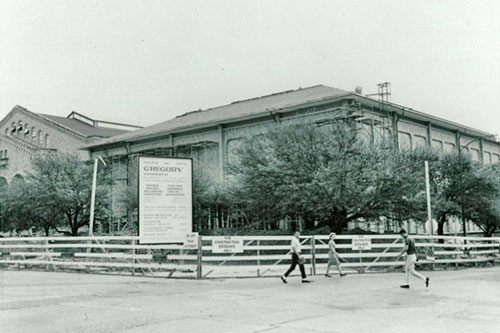
In 1930, the brand-new Gregory Gymnasium opened for the men’s program. Soon after, Berry and the Men’s Intramural Program took ownership of a tract of land just south of Gregory Gymnasium that served as the men’s fields until 1967. With a new gym that also included a natatorium and new fields, the decade of the thirties was one of explosive growth in participation and popularity. One popular event started by Berry in 1932 was Fite Night. This event culminated in the spring championship games in basketball and volleyball, and finals in ping pong, wrestling, and boxing. Fite Night became so popular that tickets had to be issued as crowds exceeded 7,000 people. In 1951, though, boxing was outlawed. A change to Sports Night didn’t carry the same appeal as Fite Night and Sports Nite was eventually cancelled.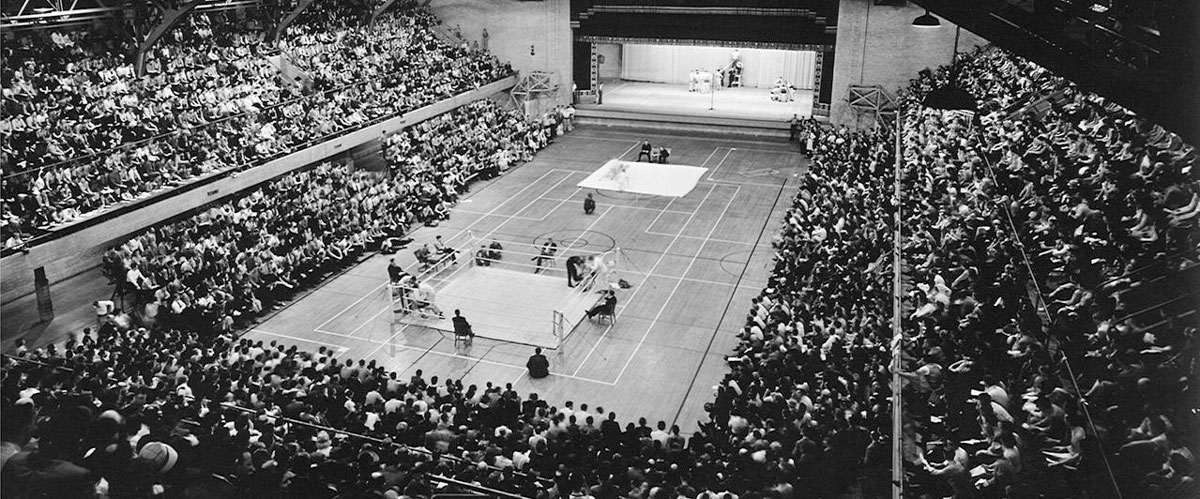
Fite Night, 1932-1953
Posture Contest, 1938-1969
The Wall of Fame
The Golden Age of Intramurals
For the next three decades, roughly 1945–1969, both intramural programs flourished—even with the retirement of Anna Hiss in 1957 followed by Berry Whitaker in 1960. Sonny Rooker, who Berry hired as an Assistant Director for Men’s Intramurals in 1948, assumed the Director position for the Men’s Program. Two interim directors—Jo Chapman and Sheila O’Gara—filled the gap left by Anna Hiss until Betty A. Thompson was named Director of Intramurals for Women in 1967.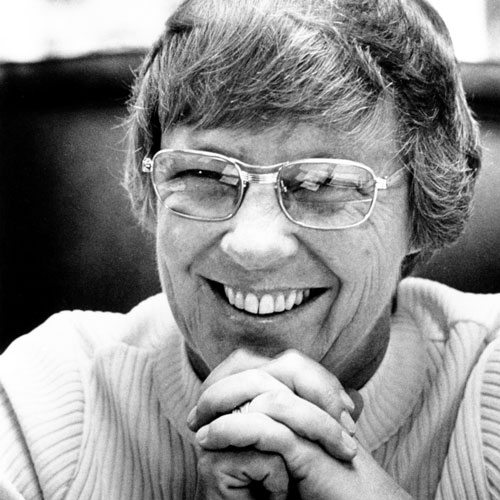
Betty A. Thompson
The Division of Recreational Sports is born
Betty Thompson’s proposal to create a division of recreation that was part of Student Affairs won approval from the president of the University. In 1972, she was appointed Interim Director of the new division and the process of combining both programs began. A year later, Betty was appointed the director of the new Division of Recreation, becoming the first woman to hold such a position at a major college or university. The following May 1974, she recommended that the name be slightly altered to the Division of Recreational Sports to reflect with greater accuracy the purpose and scope of the division.Programming growth
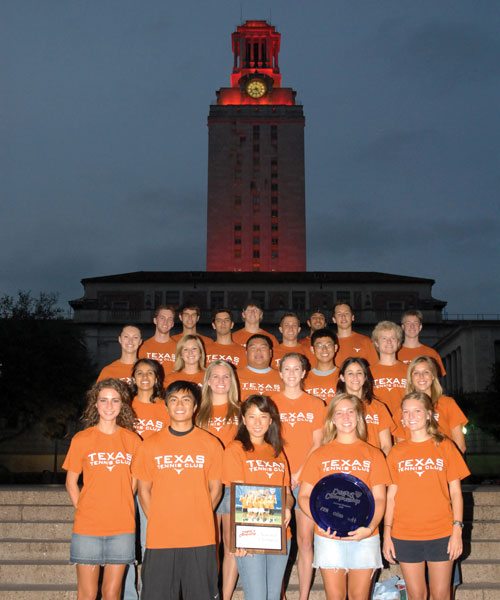
As the Division of Recreational Sports gained momentum, staff were hired to manage new program areas including an outdoor program, a fitness/wellness program, and a formal open recreation program. Intramurals added a coed division and placed a new emphasis on its officials’ training program. The men’s and women’s sport clubs—now one program under the University of Texas Sport Club Association (UTSCA)—added new clubs yearly. In 1977, Betty Thompson and Tom Dison—who was hired in 1974—initiated a thorough review of the division’s programs and facilities to create a detailed master plan for future growth. This master plan stated:“The Division of Recreational Sports is charged with making a unique contribution to the total educational function of the University of Texas by providing recreational and competitive sports opportunities designed to enhance the physical, emotional and social development of members of the University community.”
Partnership with students
More than RecSports
The new millennium
In 2001, the Friends of RecSports initiative was launched to reconnect the division with alumni and engage these valued friends with open houses, pre-game tailgates, and reunions. Of even greater significance—partially due to a shift to flat-rate tuition and rules restricting using student fees to fund new facilities—a formal and comprehensive development plan was launched in 2007 to include participants and corporate partners in the Friends of RecSports initiative. This growing area has contributed to planning the next century of UT Recreational Sports.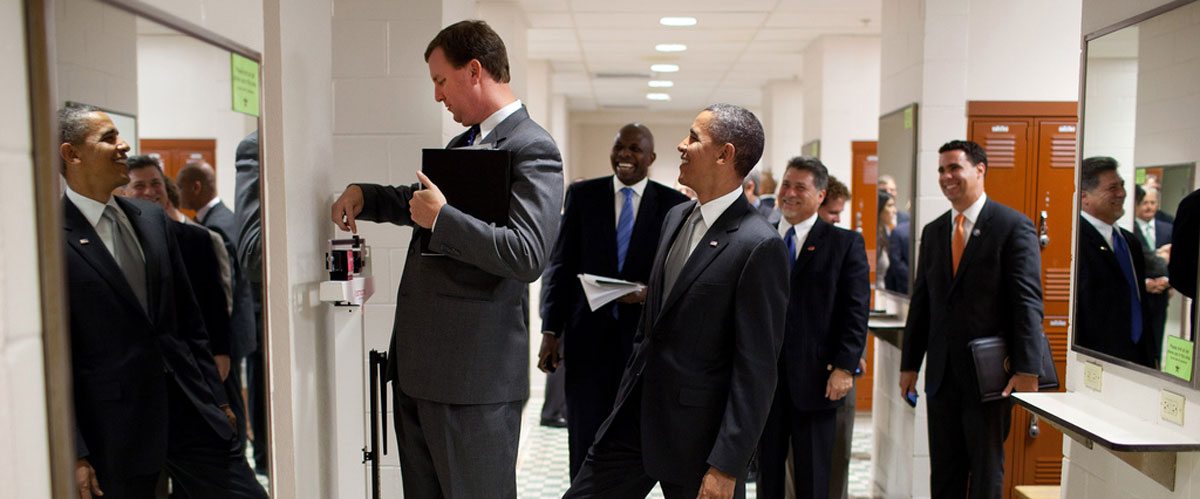
100 years and counting
Today’s RecSports programs attract nearly 90% of UT students. RecSports continues to evolve with new programs, facilities, and funding sources to meet the needs of today’s students and the next generation of Longhorns. Images courtesy of University of Texas at Austin- For more information about the Centennial Celebrations at University of Texas at Austin, please email UT Austin’s Director of Communications, Assessment, Development and IT, Jennifer Speer or contact her by phone at (512) 475-7178.
- If you are interested in highlighting your campus or a NIRSA member’s achievements on your campus, pitch us your ideas.