
Staying flexible
Curtis and Kendall can’t stress enough that flexibility is perhaps the key lesson other NIRSA members can learn from the response and relief efforts at Chico State.“Even with the best planning, there is no straight line in the aftermath of a large-scale emergency,” says Curtis.“Even with the best planning, there is no straight line in the aftermath of a large-scale emergency.”
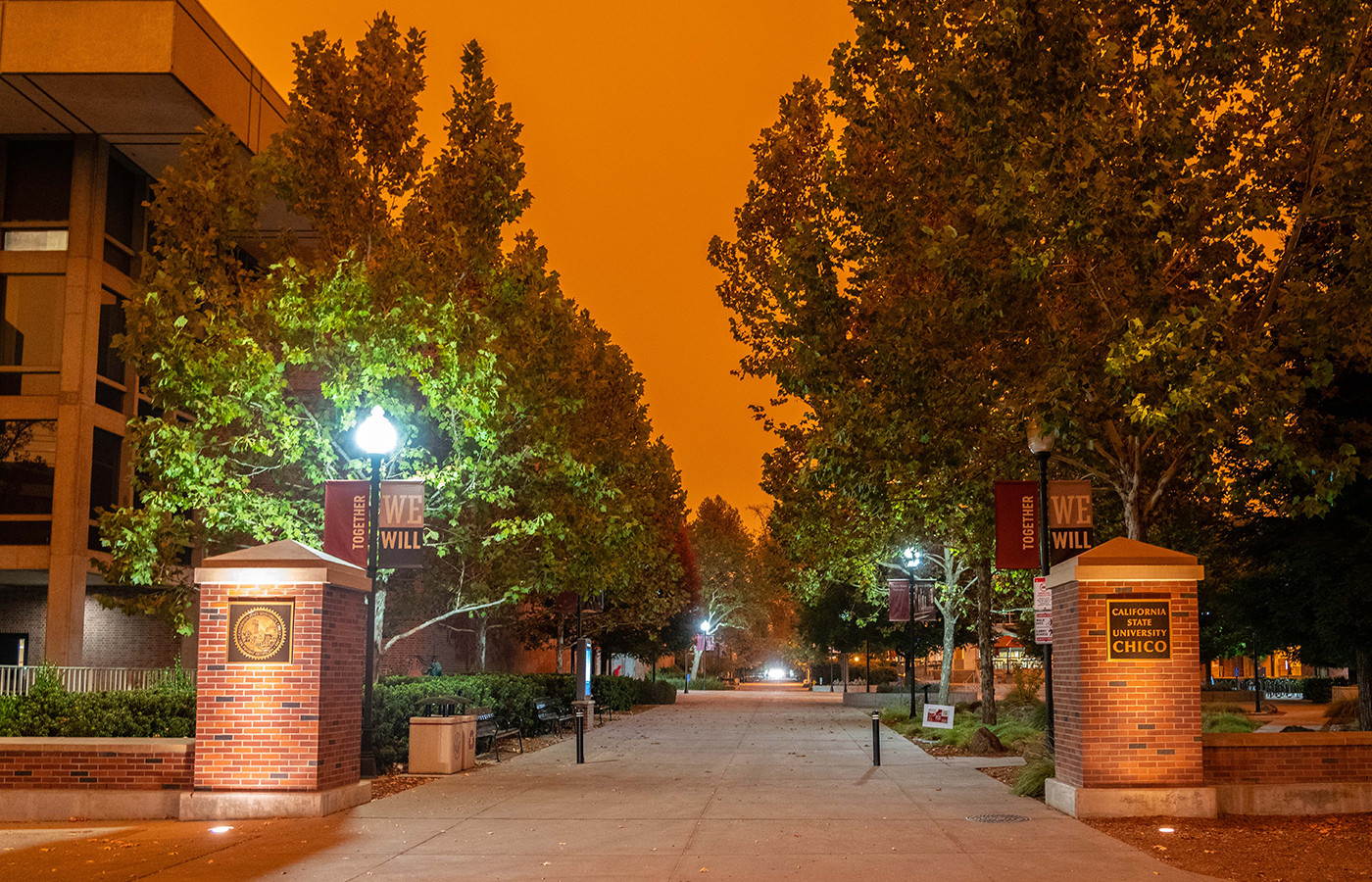
Chico State University. Photo courtesy of Keith Crawford.
“The WREC’s greatest service to those in need was to be open, available, and allow everyone that was able to return to routine.”
Rising to the occasion
When campus reopened, most services were centralized in the Bell Memorial Union including everything from student wellness services to on-site emergency insurance claim agents. The Department of University Communications in coordination with several campus entities created and is still currently managing a comprehensive online resource for the campus community. An especially moving act of collaboration was demonstrated by the Associated Students Dining. They hosted Al Roker of the Today Show and served a pre-Thanksgiving Day meal to local fire fighters and EMS professionals who lost their homes in the fire while fighting the fire. The very next day on Thanksgiving, they hosted the World Central Kitchen, a non-profit run by Jose Andres, that serves food to people in post-disaster situations. “Along with Tyler Florence and Guy Fieri, the World Central Kitchen and AS Dining prepared 15,000 Thanksgiving meals and smoked over 7,000 pounds of turkey for fire victims,” says Curtis. “Remaining food from this effort was delivered to first responder camps and local shelters.” Of course the NIRSA family can also be counted on to rally in times of trouble.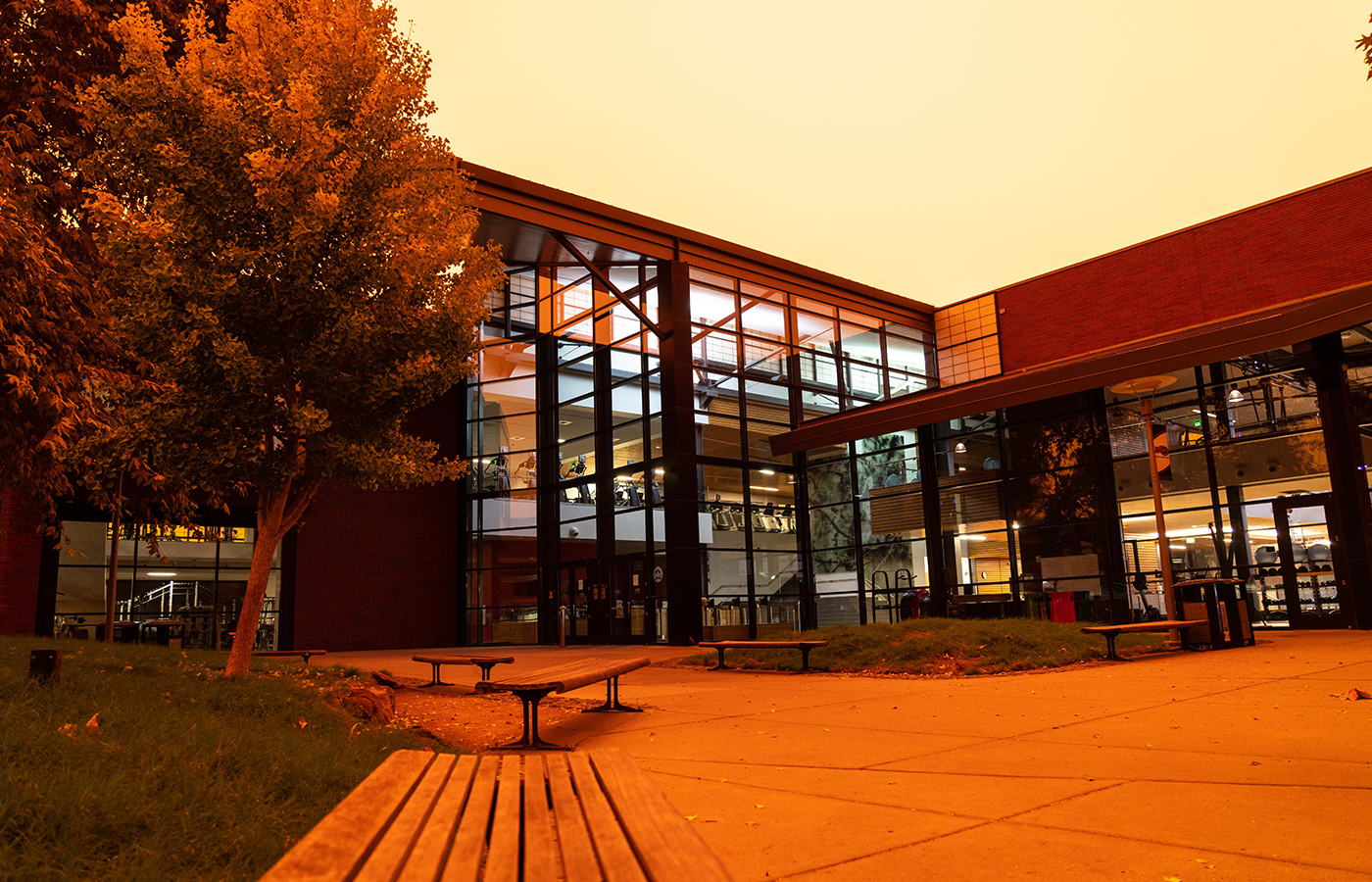
The Wildcat Recreation Center at Chico State University. Photo courtesy of Keith Crawford.
“We received emails and phone calls from other campus rec programs asking how to help and were able to send people to areas that needed resources.”
Navigating the unexpected
There are many lessons Curtis hopes other NIRSA members can learn from the response and relief efforts of Chico State. Because of the information overload in time of disaster, he recommends making a point to get in the same room with, or individually call, key staff both above and below on the organizational chart “to provide both knowledge and a solidified team approach.” “Local news, national news, social media, campus, your supervisors are all pushing information at you at the same time,” he says. “There can become a point that you are unsure what news is most current and most accurate.” Many Chico State staff had to leave town due to the debilitating smoke. Curtis emphasizes sensitivity when having to talk to staff about work when they are out of town, since it is possible that they lost their home or a family member. They also had to consider logistics like if the staff members were hourly or exempt, what it means for payroll if they are called about work, and what to do when payroll came due during the campus closure. Thankfully, their IT department was able to create an off-campus log-in system to certify payroll. Another huge concern is the short and long-term impacts of housing. Curtis says, “With 20,000 Paradise residents relocated to Chico and the surrounding areas, the housing market has skyrocketed.” In the short term this negatively impacts the students, faculty, and staff that lost their homes as finding alternative housing becomes even more difficult and perhaps a financial impossibility. Many questions still linger as to what will happen when current dormitory residents look for off-campus housing. There is no guarantee there will be any, and if there is, there is a high likelihood it will be unaffordable. Campus is counseling students on how to approach their leases that end this coming summer and trying to anticipate how the housing market will affect recruitment for full-time positions at Chico State. “Campus can make a job offer but will that individual be able to afford to relocate to Chico?” asks Curtis. “While centrally located near some of the most beautiful areas of California, Chico has a somewhat rural location, already making recruitment somewhat challenging as it’s a commitment to move here rather then how in other larger California communities where individuals can change jobs without necessarily having to change where they live. Until the market levels off at some point in the future, this puts an emphasis on the campus trying to ‘grow its own’ professionally and develop its current full-time talent on campus.”Building the future
As Curtis points out, recreation services are uniquely positioned to be a key hub of resources and support for students’ and broader campus community’s wellbeing in a post-disaster environment.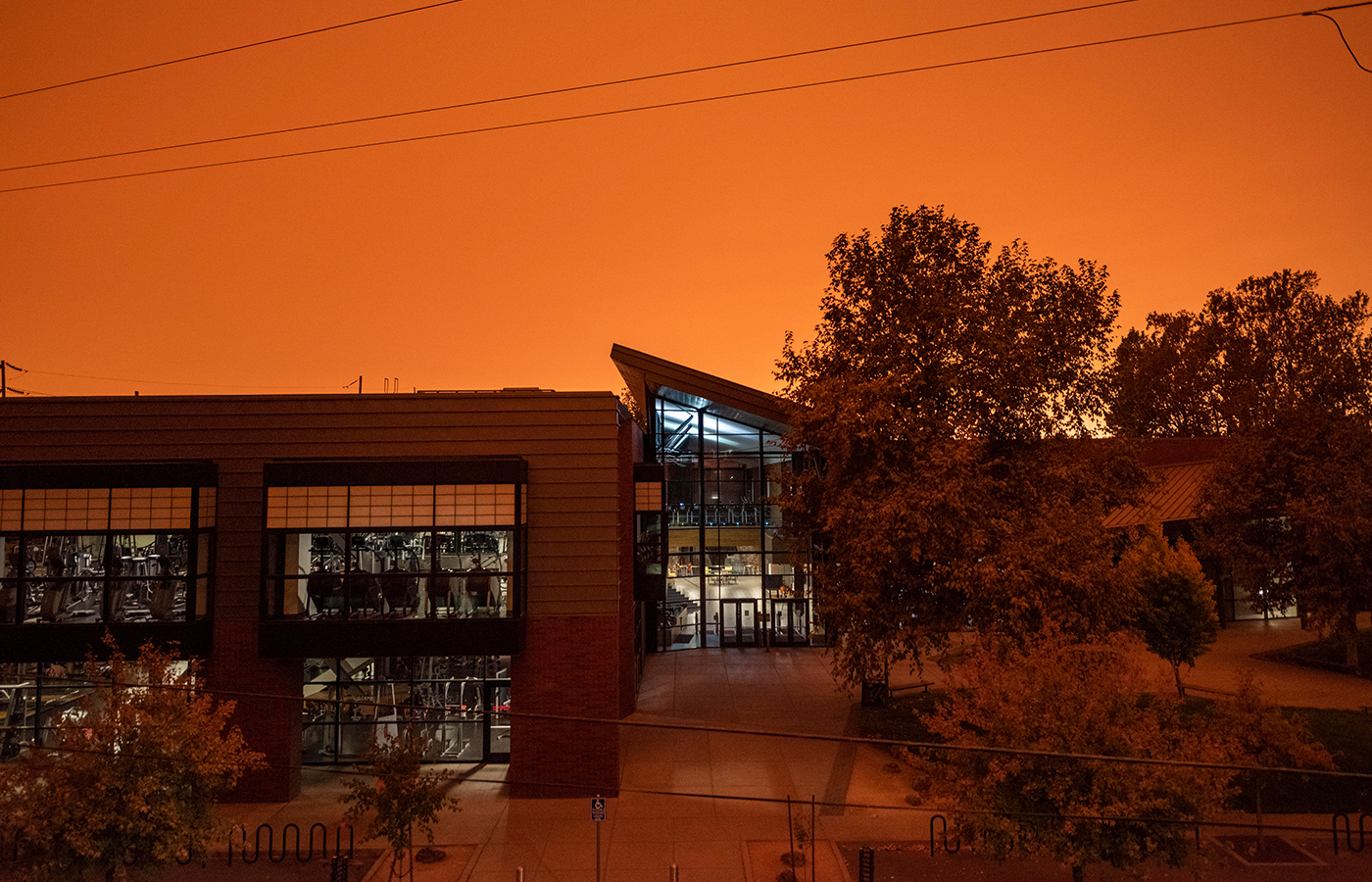
The Wildcat Recreation Center at Chico State University. Photo courtesy of Jason Halley.
“Recreation facilities already serve the health and wellness needs of students, making reopening quickly after disaster a key priority.”
Integrated approaches to wellbeing
Whether in the face of fire, flood, tornado, hurricane, or other natural and even sometimes manmade disasters, campus recreation departments are stepping forward as pivotal players on college and university campuses across North America. By regularly managing large programs, operating large and sophisticated facilities, and developing the leadership skills of student employees, campus recreation professionals bring valued competencies to the table when it comes to the pursuit of innovating, supporting, and fostering a holistic, integrated, and strategic approaches to wellbeing at the institutional level. Check out the recent statement Health and Wellbeing in Higher Education: A Commitment to Student Success, endorsed by NIRSA and seven other leading higher education associations, to see how NIRSA members are transcending reactive, siloed, programmatic approach to health and establishing foundational, proactive wellbeing initiatives for the campus community.See related: “Wellbeing statement continues to grow in support”
- For more information, contact the Director of the Wildcat Recreation Center, Curtis D. Sicheneder.
- If you are interested in highlighting your campus or a NIRSA member’s achievements on your campus, pitch us your ideas.