Each year as we come together to train our student staff here at the University of Wisconsin-Madison, I’m confronted with the same contradiction we wrestled with the year before: how do we incorporate non-binary participants into our co-ed sport rulesets? Despite the best intentions of more than a few well-meaning and talented programmers throughout our industry, the “perfect” answer to that question remains elusive. But I don’t think it’s time to throw in the towel on co-ed intramural sports just yet.
Instead, let’s acknowledge the contradiction and work together as an industry to arrive at a standard for co-ed sports that’s fit for the world we live in today.
Co-ed leagues are worth saving
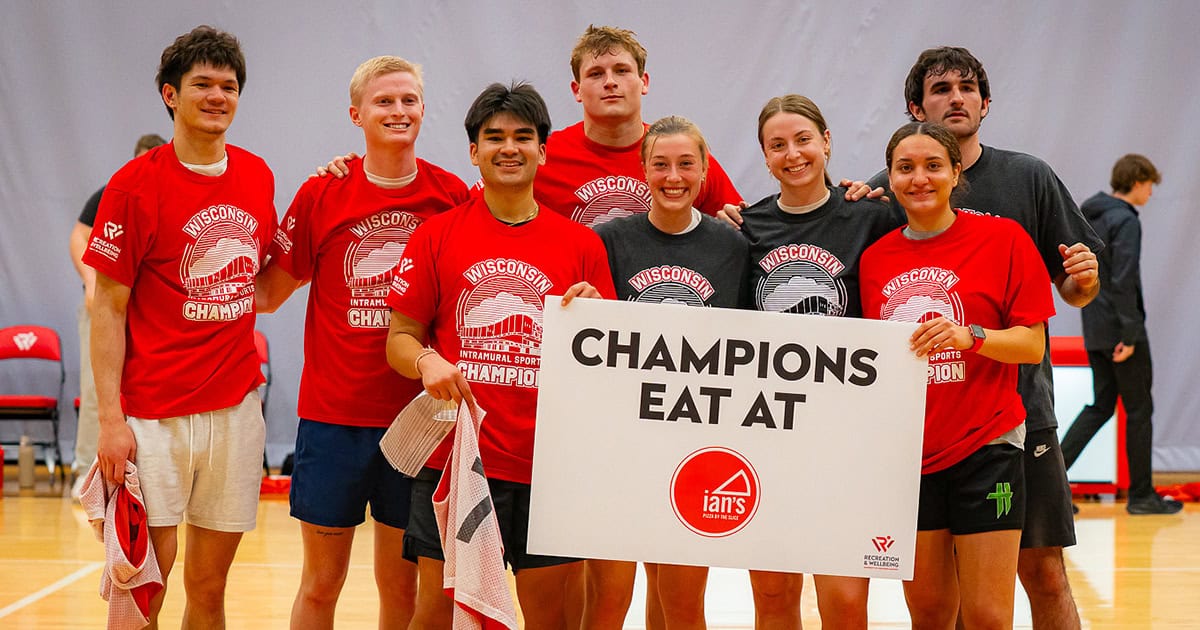
Co-ed leagues provide an additional opportunity for female participation in intramural sports, and it’s well-established that this physical activity and connection to campus is associated with positive mental and physical health outcomes. Coupled withincreased rates of girls and women dropping out of sports when compared to their male counterparts, the evidence is clear: college and university intramural sports departments have an important role to play in bolstering sport participation among women.
In my own experiences programming intramural sports, at every stop along my campus rec journey, there have always been more women participating in intramural sports through co-ed leagues than leagues dedicated to women only. I imagine that isn’t an anomaly across the industry, either.
Theory vs. practice
It’s easy to find comfort in the shared belief that all participants are entitled to equitable avenues for participation. What’s not so easy is trying to create policies that simultaneously preserve competitive balance, encourage participation across the entire spectrum of gender expression, and, for some, keep their department insulated from policy makers who may not share that same belief.
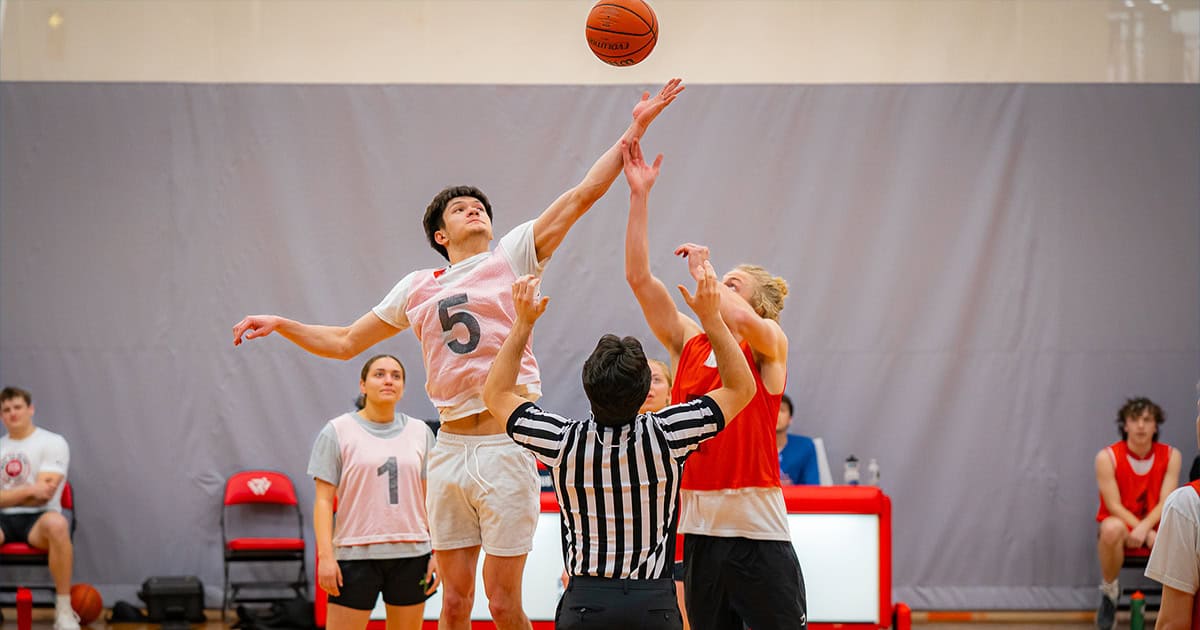
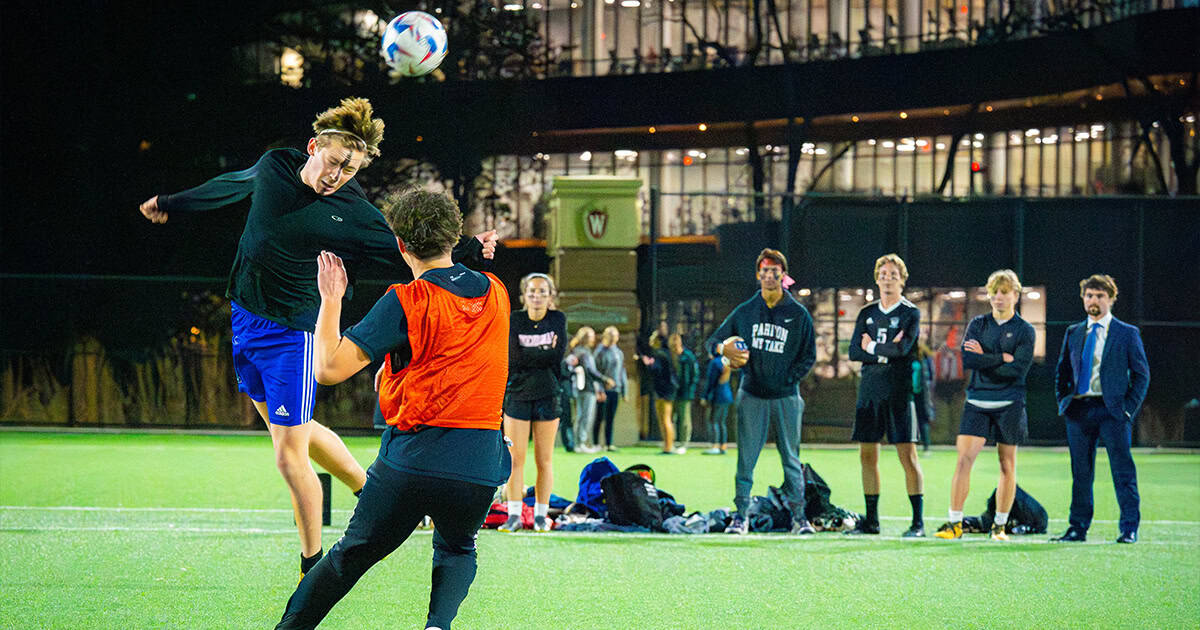
Illustrating the issue at hand is simple enough: If you operate at a school where the rules mandate that during a game of co-ed basketball, teams must have three male and two female players on the court at all times—when a participant doesn’t fall into either of those binary categories, it makes it difficult (if not impossible) for officials and administrators to adjudicate whether any lineup they’re featured in is permissible. If anyone on the court calls the validity of an opponent’s lineup into question, it’s immediate gridlock. And the hypothetical is not far-fetched. It’s the likelihood of this scenario actually playing out that makes it cause for concern.
Many potential solutions to the problem seem simple enough, until we consider that the next steps in their implementation would require league administrators or game officials to ask the players on the court to identify their gender publicly, which, aside from crossing serious ethical lines for a game of recreational basketball, is a task that doesn’t really fit into a student employee’s job description, even when you turn your head and squint.
Avoiding the need for players to identify themselves as they step onto the court is essential. So, ideally, intramural sports programs should seek to avoid this kind of interaction altogether through clear, comprehensive policies surrounding participation in these leagues.
Where “open” leagues come up short
One solution that shows some promise is a simple reframing of these leagues to “open”, allowing teams to field a lineup of any gender makeup. While this does eliminate the need for players to identify themselves as either male or female, the vast range of lineup opportunities leaves the potential for incredibly disparate matchups on the field of play. After all, gendered leagues do serve a purpose: they seek to level that playing field and create a safe environment for participants.
In open leagues, there’s the risk of teams with exaggerated differences in height, speed, and intention matching up against one another, likely compromising the experiences of both teams’ players.
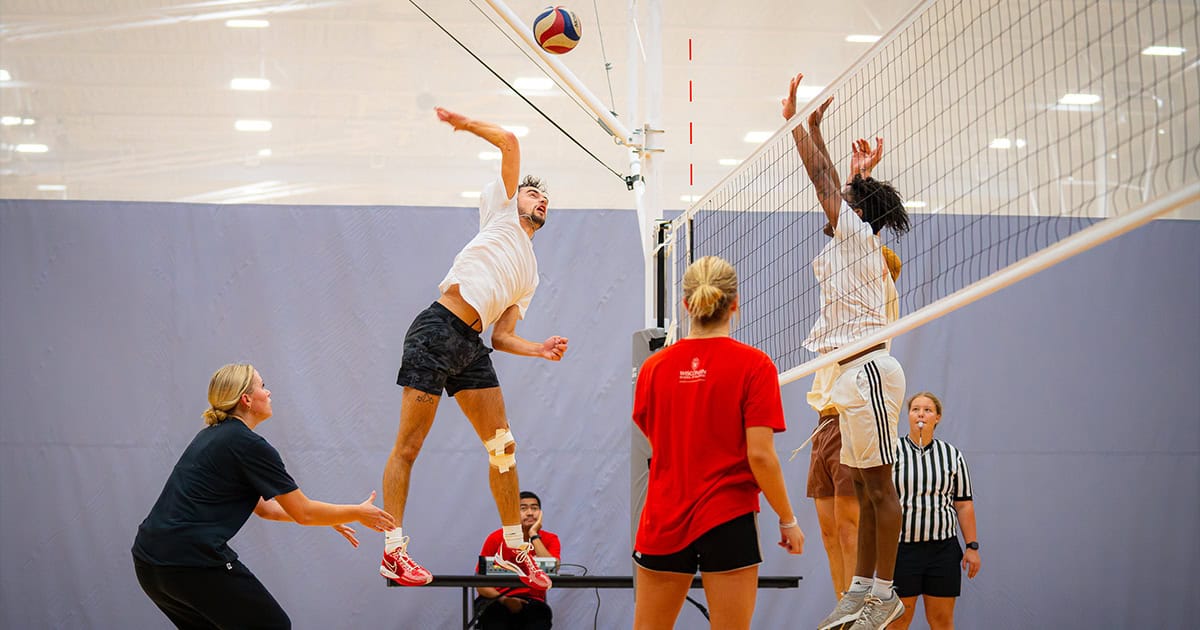
To put it plainly, the purposefully unlegislated nature of open leagues leaves programmers vulnerable to the possibility of having those leagues filled with male-dominated lineups. It’s worth noting when considering this route that the participant make-up of most schools is already somewhere in the realm of 75% male; if a school’s open leagues become de facto men’s leagues, the claim that open leagues are effective means for increasing non-male participation as an inclusive practice seems pretty disingenuous. There’s a time and place for open leagues, without a doubt. But they can’t be relied upon to fill any potential void left behind after moving away from a traditional CoEd sports model.
Is wait and see really a strategy?
It’s probably not an oversimplification to say that the second most popular approach among colleges and universities when facing the contradiction of co-ed sports is to essentially just wait and see, handling any protests that may or may not arise on a case by case basis. Co-ed rules remain in place with stock standard verbiage, but when it comes to enforcement, employees and programmers in this camp may be pretty lax.
I’m certainly not here to condemn either; the truth is it’s my reality, too. But hoping the issue never rears its head isn’t a plan. Where this approach falls short is in establishing precedent, and without a properly enforceable framework in place, the first time it becomes a problem it could become a significant problem.
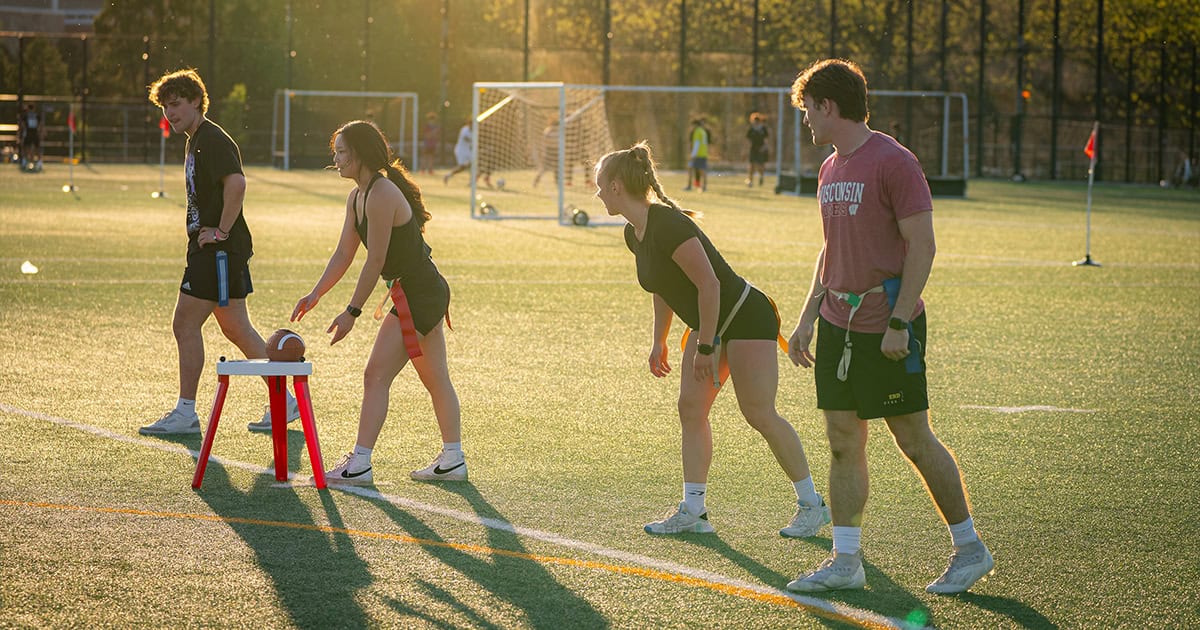
I’m also not looking to discredit any of the more proprietary attempts to solve this problem. I’m sure they’re out there. Uncovering those approaches and giving them a bigger platform will be vital as we look to expand the conversation around the future of co-ed sports. But the reality is, most schools fall into one of these two categories outlined above, each with some flaws needing to be addressed.
So, now what?
Maybe it’s not all that helpful to try to bring this to light without offering a solution. I know my students would never let me hear the end of it after all the time I’ve spent establishing the importance of being solution-oriented in our work. But in this case, the route to a solution is exceedingly complex. It’s not even out of the realm of possibility that there’s no “solution” at all, and the future of multi-gendered sport leagues at the Intramural level is more of a departure from the time-honored Co-Ed model than we’ve considered here.
But in the interest of being the best possible stewards to all that we serve, it’s time to get this topic out into the open.

Continue the conversation about intramural sports
If you’ll be attending the 2026 NIRSA + IDEA® World Conference & Expo, consider adding the Intramural Sports Foundations & Future Trends preconference workshop to your registration; the in-depth precon is happening the morning of April 7.
On Wednesday, April 8, attendees can also plan to join the 90-minute Intramural Sports Roundtable. This is a collaborative space for intramural sports professionals to share challenges, successes, and innovative approaches to programming, recruitment, retention, and engagement. It’s a great place to learn alongside peers who are also navigating shifting participation trends, exploring new formats and rule modifications, and seeking creative solutions to facility or staffing limitations. Come ready to contribute, ask questions, and leave with actionable insights and inspiration to elevate your campus programs.
Ideas in Motion online discussions will continued to be added to the NIRSA Learning calendar over the spring and summer. Stay engaged, and reach out if you’d like to continue the conversation.
- For more information about this topic, contact Parker Goss, Coordinator of Intramural Sports at the University of Wisconsin-Madison.
- NIRSA publishes articles on a wide variety of topics related to collegiate recreation, including member spotlights, commentary and views, and program/initiative features. If you are interested in writing for NIRSA, pitch us your ideas.