Candidate for Region II Regional Representative
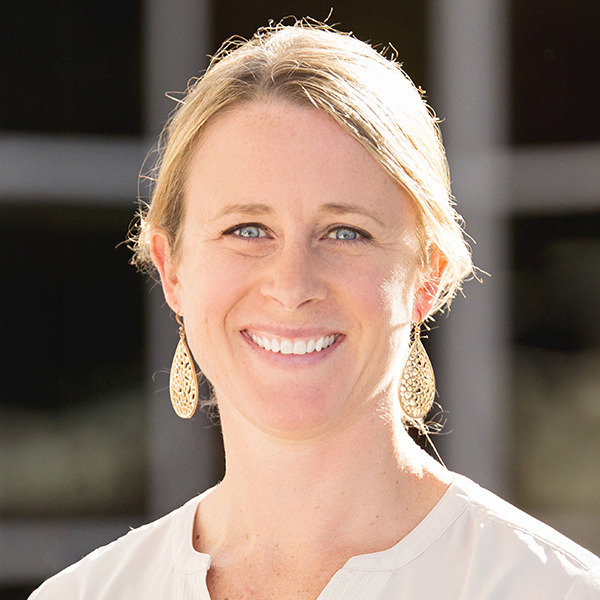
Dr. Marti Tomlin
University of Richmond
Biography/Summary Resume
Dr. Marti Tomlin is the Director of University Recreation at the University of Richmond (UR). Marti earned her Bachelor of Arts from the University of North Carolina Wilmington, holds a Master of Science in Sports Leadership from Virginia Commonwealth University (VCU), and completed her Doctorate in Higher Education Leadership through VCU. Marti’s leadership ethos is centered around three guiding principles: ensure communication is clear and kind, allowing strong and supportive relationships to form and grow, which in turn ensures a culture of trust and autonomy within the team.
Marti began at UR in 2006 as the Manager of Facilities and Events. She was promoted to Assistant Director of Facilities, then to Associate Director, before becoming the Director. In her role as Director, Marti is responsible for oversight of the department including vision setting, strategic planning, departmental budgets, facilities, equipment, programs, staff and all the many programs of University Recreation. Additionally, Marti manages capital projects for the Division of Student Development, co-chairs the Health and Well-being (HWB) DEIB Working Group, teaches a first year Wellness class, and serves on the HWB Leadership Team.
Marti is an active member of NIRSA. She is a former member of the NIRSA Foundation Board and Health and Wellbeing Task Force and currently serves on the Assembly and Governance Review Steering Committee. Marti has been an advocate for NIRSA members in many roles throughout the state of Virginia (including serving as State Director and hosting multiple State Workshops), within Region II (including hosting a Region II Conference and serving on regional committees), and at the national level.
Outside of higher education Marti is involved in advocating for the LGBTQ community. In her free time, she enjoys spending time outside, especially running or hanging out on the Rappahannock River with her family, including partner Jessica and twin boys Knox and Logan.
What is your NIRSA “Why”? (What does NIRSA mean to you?)
My NIRSA why can be best explained through a story about our impact as collegiate recreational professionals.
A year ago, the University of Richmond had a student tragically drowned in our campus lake. The entire campus was devastated, especially our Ultimate Frisbee sport club team that the student had been a member of. The weekend after the incident, UR had planned to host a giant sport club tournament with over 15 games scheduled throughout the weekend. The sport club executive committee, who was still reeling and devastated but mature and thoughtful, made the decision to cancel the large tournament for all clubs to give time to honor and grieve alongside their friends on the Ultimate team. That weekend our recreation center was a hub for gathering to remember this student; our colleagues in counseling provided grief counseling throughout the weekend, and our health promotions friends offered programs to process the tragedy. As his funeral was being planned, the family reached out and asked for his Ultimate jersey to bury him in.
This experience exemplified the impact that we have as NIRSA professionals through the impact we have on the students we serve. Those students are a huge part of my “why;” being a positive part of their journey, mentoring them into leaders, supporting them through transitions, and watching them persevere is what gives me the grit to go on. In addition, when my colleagues in the rec department as well as counseling, health promotion, and throughout student development showed up to offer their support, it reminded me that the professional relationships are something special in higher ed, and especially campus recreation. In this situation, it was the relationships on my campus that I am grateful for. Every day I am grateful for the professional connections and friendships I have made across NIRSA. The students brought me here, but it is the deep, supportive, understanding relationships with other NIRSA professionals that keep me here.
What are the current trends in collegiate recreation and higher education that you see impacting our work and the Association? How would you collaborate with the members in your region and the Member Network team to solve these issues?
Two current conversations I see impacting our work, and that I would like to facilitate across the Region, are 1) how we do the work of wellbeing and 2) how we continue to discuss equity, diversity, and inclusion.
Wellbeing continues to be a critical conversation in collegiate rec. More specifically, we must continue to develop the understanding of what wellbeing is (and is not), level set our language and support our campus community’s wellbeing. While the Wellbeing Taskforce made exceptional progress, they cannot do the work alone. We need to figure out how we, as rec professionals, can inspire the entire campus to do the work of wellbeing. We also need support, not just from the top down, but in many cases through education that spreads from the bottom up; we are finding ourselves in the critical role of helping our VPs/AVPs to understand wellbeing. As the Region II Rep, I would suggest that there needs to be continued, and additional collaboration between NIRSA and other professional organizations who are doing the work of wellbeing.
Additionally, the current climate on college campuses is not comfortable for many people as it relates to EDI. We know that in collegiate rec we need diverse programs and services that reflect our diverse participants. We know all our participants should be treated equitably if our facilities and programs are to create an inclusive environment, where anyone that engages with us feels like they belong. The fact that everyone’s experience is not always an experience of belonging points to the need to reevaluate how to view and discuss EDI. As the Region II Rep, I would contemplate and discuss how we could reimagine this work for these days, using the Climate Study, the work of the Assembly, NIRSA’s resource guide for EDI, its statement on inclusion and diversity, and its guide to managing civil discourse in collegiate recreation. Region II members must continue to be leaders in collegiate recreation with an eye towards EDI.
How has your experience in your state, region, and/or NIRSA prepared you to serve on the Member Network? What unique skills or talents would you bring?
A few of my key experiences include:
- As a member of the Governance Review Steering Committee we are reviewing selected aspects of NIRSA’s current governance structure. This opportunity gives me insight into the direction that NIRSA is moving.
- On the Assembly I am privileged to be able to think strategically about the future of collegiate recreation through germinating new ideas, vetting those ideas, and serving as a catalyst for change based on those ideas.
- My experience serving on the Foundation Board of Directors gave me an understanding of both fiduciary responsibilities and governance models.
- Sitting on the NIRSA & Matrix “Move for Your Mind” Steering Committee, we are leading the development of an awareness campaign, with the goal of increasing physical activity and movement as a way to support student mental health. By encouraging participation in campus recreation, this initiative ensures we put our students, and our purpose, first.
- I recently chaired the Virginia State Workshop. Managing a workshop is not so different from managing a regional conference. I wrote a thoughtful and detailed plan. The plan allowed me to steer the process without micromanaging. I assisted staff when and where required while still supporting my staff in developing their skills and competencies. We were able to host a successful conference with minimal stress and maximum excitement about showcasing what they produced. As the leader of this team, I feel proud of what they accomplished.
- As a member of the Health & Wellbeing Taskforce, we saw a gap in how the membership understood what wellbeing is. During the NIRSA Conference, we presented on “Speaking the Language of Wellbeing” where we described the difference between health, wellness, and wellbeing. My fellow presenters and I then communicated how to connect health, wellness, and wellbeing with collegiate recreation. As I shared above, wellbeing in campus recreation is a key conversation I believe we need to be having.